AIADMK Announces Candidates for Madurantakam and Dharapuram Bypolls

Two Assembly seats can seem small in a state as politically active as Tamil Nadu. Yet bypolls often do more than fill vacancies. They test party discipline, local networks, caste and community equations, and the mood of voters between larger elections.
The AIADMK’s decision to announce candidates for the Madurantakam and Dharapuram bypolls gives the party’s campaign a formal starting point. It also turns attention to two constituencies that carry distinct local concerns, even while they fit into the wider contest between Tamil Nadu’s major political forces.
For the AIADMK, the nominations are not just about putting names on the ballot. They are about signalling readiness, containing internal competition, and giving local workers a clear face around whom they can organise. For voters, the announcement is the moment when the bypoll shifts from speculation to a real campaign.

The announcement gives AIADMK a campaign base
Candidate announcements matter because they set the rhythm of a bypoll. Until a party names its nominees, local units can remain in waiting mode. Once the candidates are chosen, ward-level coordination, booth committees, door-to-door outreach, and alliance work become more focused.
In the case of the AIADMK by elections strategy, early clarity can help reduce confusion among workers. Tamil Nadu parties rely heavily on local organisers who understand streets, unions, community networks, self-help groups, farmers’ issues, and the influence of panchayat-level leaders. A candidate is useful only when that network starts moving in one direction.
The Madurantakam and Dharapuram contests will also test how the AIADMK manages local expectations. In any bypoll, several aspirants may seek the ticket. A central announcement settles the question, but it does not always settle the emotions around it. The party’s immediate task is to bring disappointed aspirants into the campaign rather than allow quiet resistance.
That matters in close contests. A bypoll can turn on turnout in a few neighbourhoods or on whether local functionaries work with conviction. Tamil Nadu’s parties know this well. Even a candidate with personal goodwill needs a ground team that can do the patient work of contacting voters repeatedly.
The announcement also helps shape the public message. Once nominees are named, the party can frame the election around specific local claims:
The candidate’s connection with the constituency
The party’s record in government and opposition
Local grievances that need Assembly attention
The need for a strong representative from the area
Bypoll campaigns are often shorter and sharper than general election campaigns. That makes timing important. A party that names candidates quickly gets more days to build recognition and handle local criticism before polling.
Why Madurantakam and Dharapuram matter
Madurantakam and Dharapuram are not interchangeable seats. Each constituency has its own political memory, social composition, economic concerns, and voter expectations. Treating them as just two bypolls would miss the point.
Madurantakam, in Chengalpattu district, sits in a region shaped by both agrarian life and the pull of urbanising corridors. Like many constituencies in northern Tamil Nadu, it carries concerns that can range from water sources and roads to employment access, bus connectivity, and welfare delivery. Local identity matters here. Voters often look closely at whether a candidate understands village-level problems and can follow up with departments.
Dharapuram, in Tiruppur district, has a different setting. The area is linked to western Tamil Nadu’s political patterns, where agriculture, trade, mobility, and local enterprise all influence voting behaviour. Issues such as irrigation, rural roads, price pressures, public services, and employment can shape the campaign. In western Tamil Nadu, parties also pay close attention to booth management and local alliances because voting blocs can be highly organised.
Together, the Madurantakam, Dharapuram constituencies give the AIADMK a chance to speak to different parts of the state. One is tied to the northern belt’s evolving mix of rural and semi-urban concerns. The other reflects the western region’s distinct political and economic character.
That is why candidate selection becomes sensitive. A party may look at many factors before finalising a nominee:
Factor | Why it matters in a bypoll |
Local visibility | Voters have less time to get familiar with a new face |
Community acceptability | Bypolls often magnify local social equations |
Party loyalty | Campaign discipline matters when time is short |
Ability to mobilise workers | Booth-level work can decide narrow contests |
Public image | Opponents quickly target weak spots in a short campaign |
A strong bypoll candidate does not need only popularity. They need staying power through a campaign that can become intense, personal, and hyperlocal.

The larger political message behind the nominations
Bypolls rarely decide who governs a state on their own. Still, parties treat them seriously because they create political signals. A win can lift morale. A loss can raise questions about organisation, alliance choices, leadership reach, and the party’s message.
For the AIADMK, the announcement of candidates for Madurantakam and Dharapuram comes with three broad messages.
The party wants to show organisational control
Naming candidates is a basic act, but in party politics it also shows control. It tells cadres that the leadership has taken a decision and expects the organisation to follow. In a state where local loyalties can be deep, this matters.
The AIADMK has historically depended on a strong command structure. In a bypoll, that structure must translate into field activity. Senior leaders may campaign, but the real test lies in the work of local units. They have to identify supporters, persuade undecided voters, arrange campaign visits, monitor polling-day turnout, and respond to rival narratives.
Candidate selection is the first step in that chain.
The nominations help define the contest early
Once candidates are announced, rival parties can no longer campaign against an abstract opponent. They must respond to a specific nominee. This changes the tone of public debate.
The AIADMK, too, can move from general criticism to constituency-level promises and local comparisons. The party can ask voters to judge the nominee’s accessibility, the rival candidate’s record, and the government’s handling of constituency issues.
In Tamil Nadu, such framing matters because voters often distinguish between state-level preference and local candidate preference. A party’s broader image helps, but bypoll voters may still ask a simple question: who will answer when there is a local problem?
The bypolls help measure cadre energy
Between major elections, parties need moments that re-energise their base. Bypolls provide that. They force district units back into campaign mode and reveal how active the organisation remains.
For a principal opposition party, cadre morale is especially important. Workers need to feel that the party is competitive and that their effort can produce results. Candidate announcements give them a rallying point.
A bypoll defeat does not always signal a major shift. A bypoll win does not always predict the next general election. But the campaign itself can show whether a party’s local machinery is alert, united, and persuasive.
What voters are likely to weigh
Voters in Madurantakam and Dharapuram will not decide only on party symbols or speeches by senior leaders. In bypolls, daily-life issues usually rise quickly.
Common questions can include:
Has the area received enough attention from the government?
Is the candidate accessible and locally known?
Can the elected MLA raise constituency issues effectively?
Will welfare schemes reach eligible households without delay?
Are roads, water supply, transport, schools, and health services improving?
Does the candidate have the backing needed to get work done?
These questions can cut across party lines. A voter may support a party at the state level but still expect a local representative who is visible after the election. That is why candidates spend much of a bypoll campaign meeting people directly, often in small gatherings rather than only at large rallies.
The AIADMK’s nominees will need to connect state-level criticism with local concerns. General attacks on rivals may energise supporters, but undecided voters often want to hear what will change in their street, village, ward, or town.
The rival parties will likely test the AIADMK candidates on credibility, past performance, and local reach. That is normal in a bypoll. The shorter campaign cycle leaves little room for vague promises. Every claim is likely to be checked against lived experience.
In a bypoll, the most powerful campaign message is often the one that sounds local, specific, and believable.
What happens next in the bypoll campaign
With candidates announced, the next phase is practical and fast-moving. Parties usually move through a familiar sequence, though the intensity varies from seat to seat.
The AIADMK will need to introduce or reinforce its candidates among voters. If the nominees are already well known locally, the campaign can focus on message and mobilisation. If they are less familiar in some pockets, the party must build recognition quickly.
Senior leaders may visit the constituencies to signal seriousness. Such visits can draw crowds and media attention, but the impact depends on follow-up. After a large public meeting, local teams still have to convert interest into votes.
Alliance management will be another key task. Tamil Nadu bypolls often involve not just one party’s machinery but the cooperation of allied organisations, caste and community leaders, local influencers, and smaller political groups. Even when alliances are clear at the top, local coordination takes effort.
The party will also watch nominations, withdrawals, rebel candidates, and independents. In a close bypoll, even a small split in an expected vote base can affect the final result. That is why parties spend time persuading local figures not to contest separately and ensuring that campaign teams speak in one voice.
For voters, the coming campaign will likely bring:
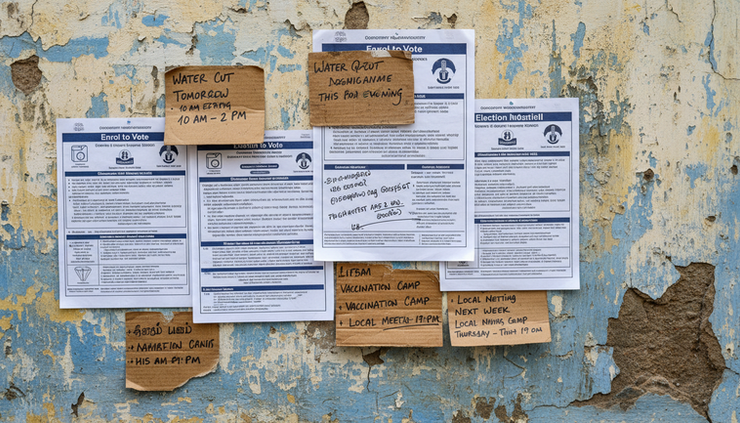
Street meetings and local canvassing
Visits by state and district leaders
Constituency-specific promises
Attacks on rival candidates and parties
Appeals based on welfare, identity, local development, and governance
The Election Commission’s schedule and model code rules will shape the formal process. Once polling nears, attention will move from speeches to turnout. Parties will work to ensure their identified supporters actually vote. This is where booth-level organisation becomes decisive.

The takeaway for Tamil Nadu politics
The AIADMK’s announcement of candidates for the Madurantakam and Dharapuram bypolls turns two pending contests into active political tests. The party has made its first major move. The focus now shifts to how well it can unite local workers, frame constituency issues, and persuade voters that its nominees can represent them effectively.
For the AIADMK, these bypolls are a chance to demonstrate organisational strength beyond headline politics. For rival parties, they are an opportunity to challenge that claim at the booth level. For voters, the choice will be practical as much as political: who knows the constituency, who can be reached after the campaign ends, and who can speak for local needs in the Assembly.
Bypolls may be limited in number, but they often reveal the health of a party’s ground network. Madurantakam and Dharapuram will now show whether the AIADMK’s candidate choices can become a disciplined and convincing campaign.



Comments